Wood and dry ice interact through the principles of sublimation and combustion. Understanding how has applications across cooking, woodworking, and fire science.
Not sure how much you'll need? Our dry ice calculator estimates the right quantity for your cooler, shipment, or event in seconds.
What Is Dry Ice?
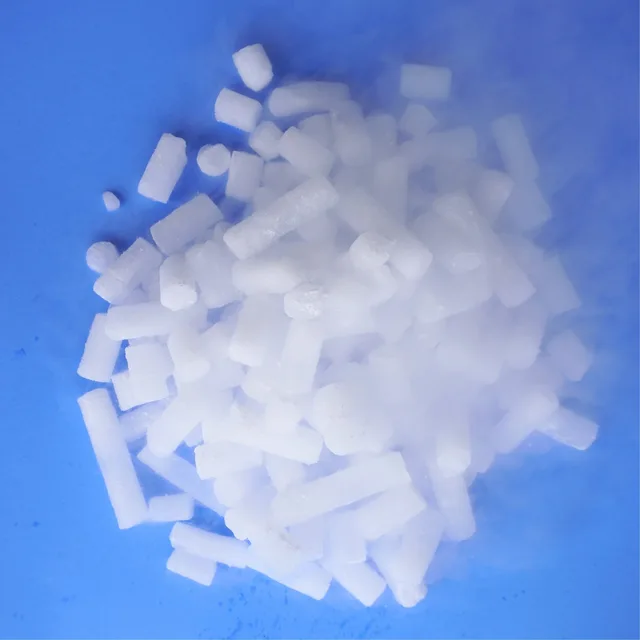
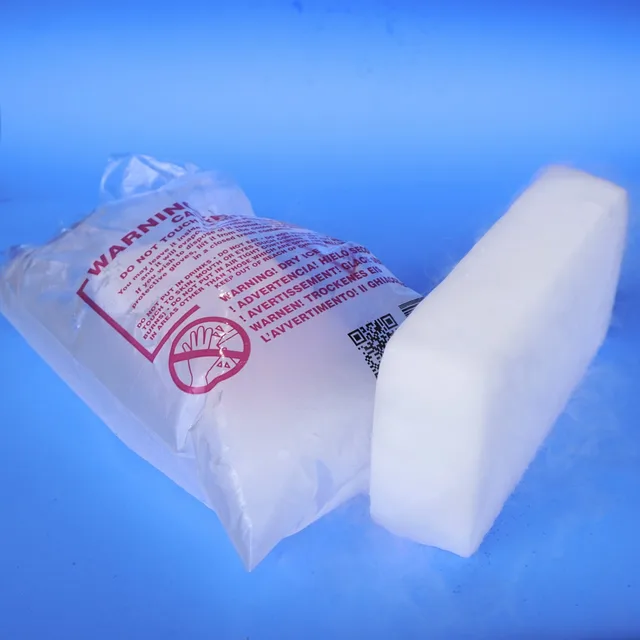
Dry ice is the solid form of carbon dioxide (CO₂), produced by pressurizing and cooling gaseous CO₂. It sublimates at -78.5°C (-109.3°F), transitioning directly from solid to gas without ever becoming liquid.
Dry Ice Sublimation
Sublimation is a physical change where a substance moves directly from solid to gas without passing through a liquid phase.
- Temperature control — sublimation cools the surrounding air, creating fog when it meets warm, humid air
- No residue — unlike regular ice, dry ice leaves no water behind
Applications of Dry Ice Sublimation
- Food preservation — keeps items frozen in transport without introducing moisture that spoils food
- Theatrical effects — creates fog in entertainment venues when sublimated in water
- Industrial cleaning — dry ice blasting removes contaminants without damaging the surface or leaving residue
The Science of Wood Burning
Wood combustion is a complex series of chemical reactions that produce heat, light, carbon dioxide, and water vapor. Wood's organic compounds are primarily cellulose, hemicellulose, and lignin.
Stages of Wood Combustion
- Ignition — the initial phase, requiring external heat to reach the reaction threshold
- Flame development — volatile compounds release and ignite as the wood heats up
- Char formation — the remaining solid material burns further given enough oxygen
Byproducts of Wood Burning
- Carbon dioxide (CO₂) — the primary product of complete combustion
- Water vapor (H₂O) — released as steam
- Carbon monoxide (CO) — a harmful gas produced by incomplete combustion
- Soot and ash — solid residue from incomplete burning
Interactions Between Dry Ice and Wood
When dry ice enters a wood-burning environment, sublimation rapidly absorbs heat from its surroundings, cooling the area immediately around it. That cooling can slow combustion by pulling temperatures below what the reaction needs. The released CO₂ gas can also displace oxygen in the vicinity, inhibiting combustion further.
Cooling Effect
Cold CO₂ gas from sublimation lowers flame temperature and can suppress combustion, which leads to incomplete burning and more byproducts.
Oxygen Displacement
Displacing oxygen reduces what's available for burning, hindering efficiency — a principle that shows up in fire suppression techniques and experimental setups alike.
Potential Applications
- Fire suppression — cooling and oxygen displacement in electrical or chemical fires
- Experimental research — studying energy efficiency and alternative fuels
- Performance art — creative visual effects through controlled interactions
None of this is just academic — understanding how dry ice behaves enriches the chemistry and points to real applications across several fields.